
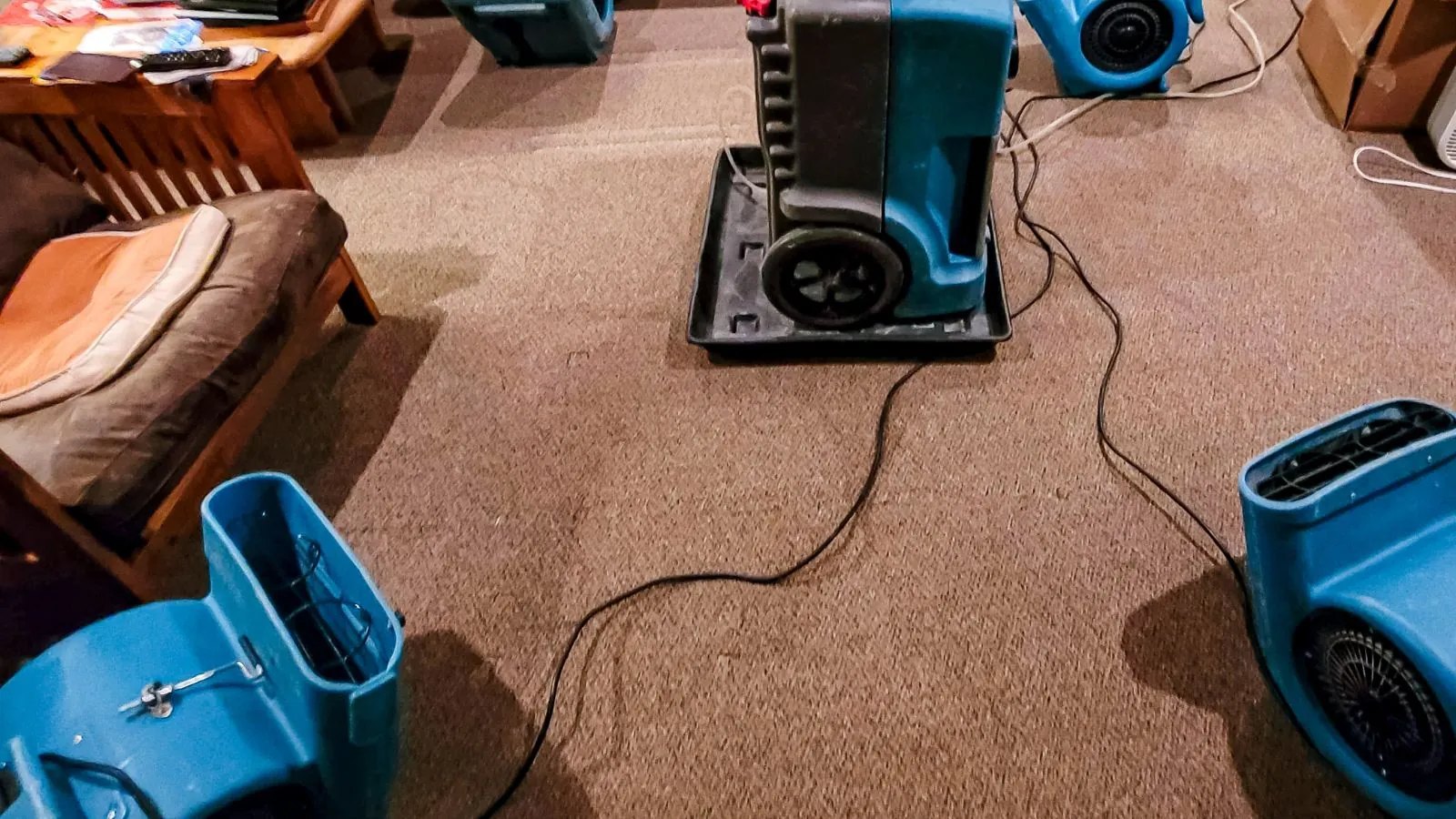
Water mitigation is the set of steps taken right after a water loss to stop damage from spreading. It includes stopping the source, removing standing water, taking out materials that cannot be saved, and drying what remains. It is not the same as repair, which is the rebuild after everything is dry.
Homeowners in Mitchell, SD often hear the word mitigation from insurers and contractors and are not sure what it covers. This guide explains the term, the usual steps, and how mitigation differs from restoration and repair.
Mitigation, restoration and repair
| Phase | Goal | Examples |
|---|---|---|
| Mitigation | Stop the damage from growing | Shutting off water, extraction, removing wet materials, drying |
| Restoration | Return the property toward its pre-loss condition | Cleaning, deodorizing, reinstalling dried materials |
| Repair or rebuild | Replace what could not be saved | New drywall, flooring, cabinets, paint |
The terms overlap in daily use. What matters is that mitigation happens first and fast, because the longer water sits, the more material has to be replaced.
The usual mitigation steps
- Stop the source of the water, with a plumber or roofer if needed.
- Assess the damage with moisture meters and thermal imaging.
- Extract standing water with pumps and extraction units.
- Remove materials that cannot be dried, such as soaked pad or contaminated drywall.
- Set air movers and dehumidifiers and monitor readings daily.
- Document readings and photos for the file.
Industry practice follows the ANSI/IICRC S500 standard for water damage restoration. You can ask any company whether its crews work to it. The standard sorts water into categories by contamination level, and the category decides how much material is removed and how it is cleaned.
Why speed matters
Water moves into porous materials quickly. Drywall, wood and carpet pad absorb it, and the water keeps traveling after the visible puddle is gone. The longer materials stay wet, the more likely they are to warp, stain or hold odor. Mitigation is about getting moisture out while materials can still recover.
Mold needs moisture to grow, so fast drying lowers the risk. No company can promise mold will never appear, and health questions belong with a physician.
Who handles what in Mitchell
The City of Mitchell Public Works Department lists water service connection and repair, wastewater collection and building inspection among its divisions, with an office at 612 N. Main Street and a phone number of (605) 995-8433, open 8:00 a.m. to 5:00 p.m. Central, Monday through Friday. If a leak is on the city side of your water service, Public Works is the place to ask.
Inside your home, shutting off the main valve stays your job. A mitigation company starts after the water is stopped.
What mitigation does not include
Mitigation does not fix the plumbing, repair a roof or rebuild finishes. A plumber stops a leaking pipe, a roofer fixes the roof and a contractor rebuilds. Some companies do several of these. Ask for the scope of each phase in writing so you know where mitigation ends and rebuild starts.
Mitigation and your insurance
Insurers expect homeowners to prevent further damage after a loss, and mitigation is how that is done. Keep photos, readings and invoices. Coverage depends on the cause of the loss and your policy, so check your policy or ask your insurer.
Where to read about specific steps
The first physical step is water extraction, and the longest is structural drying and dehumidification. If the source is a pipe, burst pipe water damage explains what happens after the water is shut off.
We serve Mitchell and nearby towns including Ethan and Mount Vernon.
Water categories and what they change
The ANSI/IICRC S500 standard sorts water into three categories. Category 1 comes from a clean source, such as a supply line. Category 2 carries some contamination, such as washing machine discharge. Category 3 is grossly contaminated, such as sewage or flood water. The category matters because it sets what can be dried in place and what must be removed.
Water also changes category over time. Clean water that sits for days in a warm structure can become contaminated, so a loss that starts as Category 1 may need more removal the longer it waits. This is one more reason mitigation is urgent.
Common mitigation equipment
- Extraction units and pumps, which remove standing water.
- Air movers, which push air across wet surfaces to speed evaporation.
- Dehumidifiers, which pull moisture from the air so materials can release more.
- Moisture meters, which show how wet a material is.
- Thermal cameras, which reveal cool, wet areas behind surfaces.
The equipment works as a system. Air movers without dehumidification just move wet air around, and dehumidifiers without air movement dry slowly. A scope that lists one without the other is worth a question.
How you know mitigation is done
Mitigation ends when readings in the affected materials return to the dry standard set against unaffected areas of the same house. The crew should show you the numbers. After that, the question is what to rebuild. Our flood damage restoration page shows how that handoff works when the loss is large.
Water already in the house?
Reading can wait. Call the dispatch line and we tell you what to do next.
Who do I call in Mitchell to shut off water at the street?
If the problem is on the city side of the service, call the City of Mitchell Public Works Department at (605) 995-8433 during business hours. Inside the house, close your main valve first.
Is mitigation the same as cleanup?
Cleanup is part of it, but mitigation also includes extraction, removal of damaged materials and drying with monitoring.
Do I need mitigation if the water seems small?
Small leaks can still soak walls and flooring. A moisture check tells you whether mitigation is needed.
How long does mitigation take?
Extraction takes hours, and drying often runs several days. The readings decide.
Can I do mitigation myself?
For a tiny clean spill on a hard floor, yes. For anything that reached walls, flooring or carpet pad, a crew with meters and equipment is more reliable.