
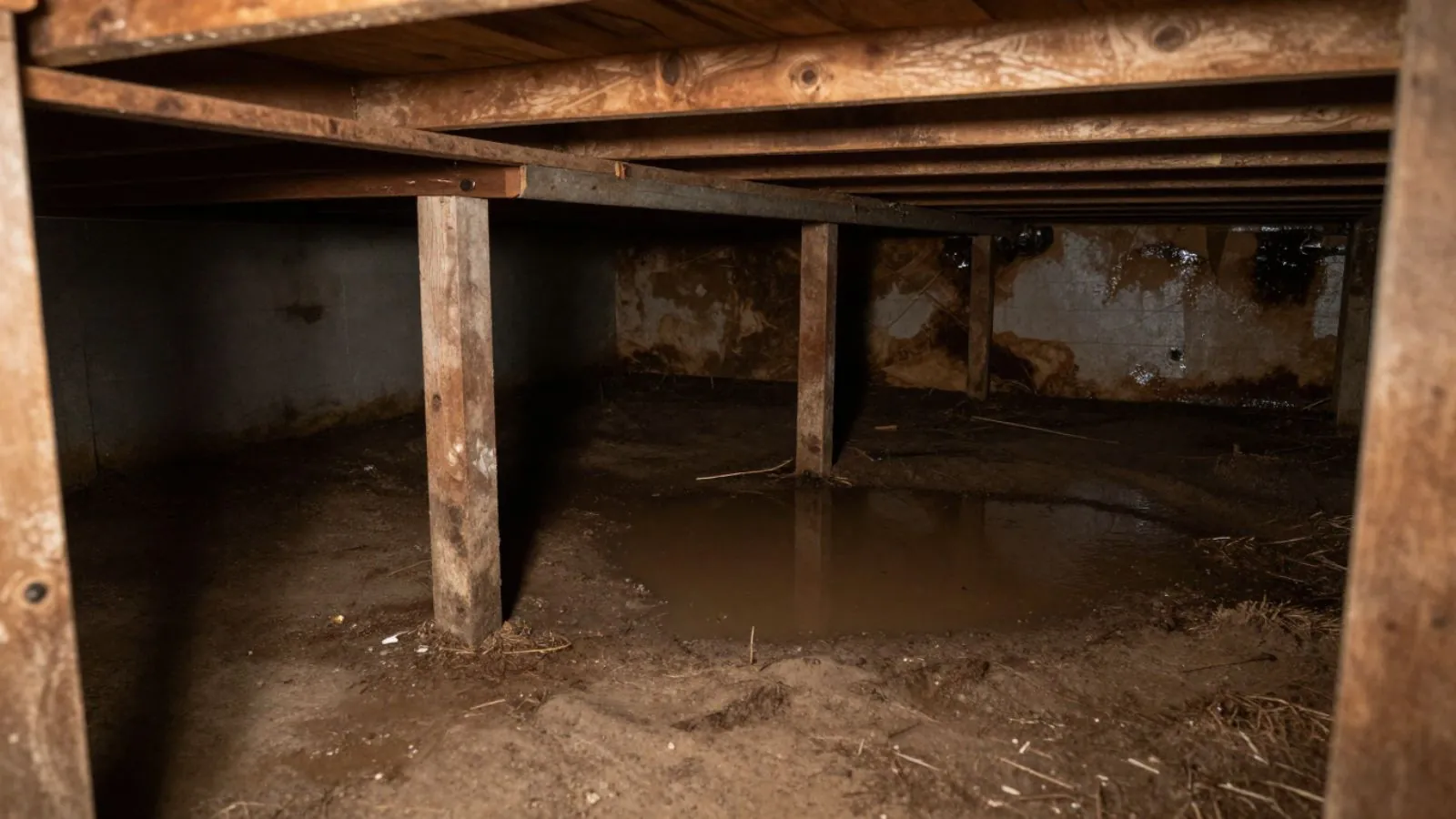
Crawl space water damage is the wetting of the shallow space under a floor, including its soil, insulation, joists and subfloor. If you have standing water or damp insulation in a crawl space in Mitchell, SD, call us to assess the space and start drying. A wet crawl space can affect the floors above long before you see a stain.
Because these spaces are hidden, many problems are found by accident. A musty odor in the house, a cold or soft floor, or a plumber's inspection may be the first clue. Call early, since wet framing and insulation hold moisture for a long time.
How crawl spaces get wet
- A plumbing leak above or inside the crawl space.
- Rain or snowmelt that drains toward the foundation and seeps in.
- High humidity or condensation on cold surfaces.
- A failed or missing sump pump in a space that has one.
- Gaps in vents, ductwork or the ground vapor barrier.
Not every Mitchell home has a crawl space, since basements and slabs are also possible. Check your plans or ask the city building inspection office at (605) 995-8433 if you are unsure. When a crawl space exists, it is worth a look after any heavy rain, since the National Weather Service recorded 8.55 inches over three days at Mitchell in June 2024.
What a wet crawl space can damage
Wet insulation sags, loses its value and holds water against the subfloor. Joists and subfloor wood take on moisture and stay damp when the space is closed up. Ductwork can sweat, and a damp soil surface keeps humidity high long after the visible water is gone.
Rooms above can show cupped hardwood, soft spots, or a stuffy smell. If wood floors are affected, the process on our hardwood floor water damage repair page covers what comes next.
How we handle a wet crawl space
The crew enters with protective gear, finds the water source, and pumps or extracts any standing water. Wet insulation and vapor barrier sections that cannot dry are removed. Moisture meters measure joists and subfloor, and a drying plan is built around what the readings show.
Dehumidifiers and air movers run in the space, with air routed so moisture leaves instead of moving upstairs. See structural drying and dehumidification for the method. Rebuilding can include new insulation and a vapor barrier.
| Condition | What it suggests | Typical response |
|---|---|---|
| Standing water | Active source or poor drainage | Pump, find the source, dry |
| Damp, sagging insulation | Leak or high humidity | Remove wet insulation, dry framing |
| Musty odor upstairs | Persistent moisture below | Moisture check and drying plan |
| Wet soil only | Ground moisture, condensation | Dehumidify, improve the vapor barrier |
Honest limits
Restoration is not waterproofing or foundation repair. If water keeps entering because of grading, gutters or a drainage fault, that needs a contractor in those trades. We dry what is wet and explain what to ask the next professional.
What affects the cost of crawl space water damage
Crawl space jobs depend on access and what is wet.
- Standing water depth and the area to be pumped
- Insulation and vapor barrier that must be replaced
- Access and the working height in the space
- Drying days and equipment
- Related damage to floors above
Want your real number?
Sudden plumbing leaks are often covered, while seepage and long-term moisture problems often are not, so check your policy or ask your insurer. Call and we explain the scope and price before work starts.
The professional reference for this work is the ANSI/IICRC S500 standard for water damage restoration, which sorts water by contamination level and sets how materials are dried or removed. In a crawl space, soil and insulation can contaminate otherwise clean water, which affects what is removed.
Water in a crawl space often travels to the floors above, which structural drying and dehumidification covers, and a flooded lower level is described under basement water damage cleanup.
Is water in a crawl space an emergency?
Standing water from an active leak is urgent, and our dispatch line is open 24 hours. A damp space with no active source is less urgent but should still be checked soon.
Do all Mitchell houses have crawl spaces?
No. Housing varies, with basements, slabs and crawl spaces all possible. Confirm your own home through plans or the city building inspection office.
Can wet crawl space insulation be dried in place?
Usually not. Fiberglass loses its value when soaked and tends to stay wet. Removal is common.
Will you waterproof the crawl space?
No. We dry and restore water damage. Waterproofing is a separate trade.
How do I tell if my floors are being affected from below?
Look for cupping, soft spots, a cold floor or a musty smell. A moisture meter on the subfloor can confirm it.