
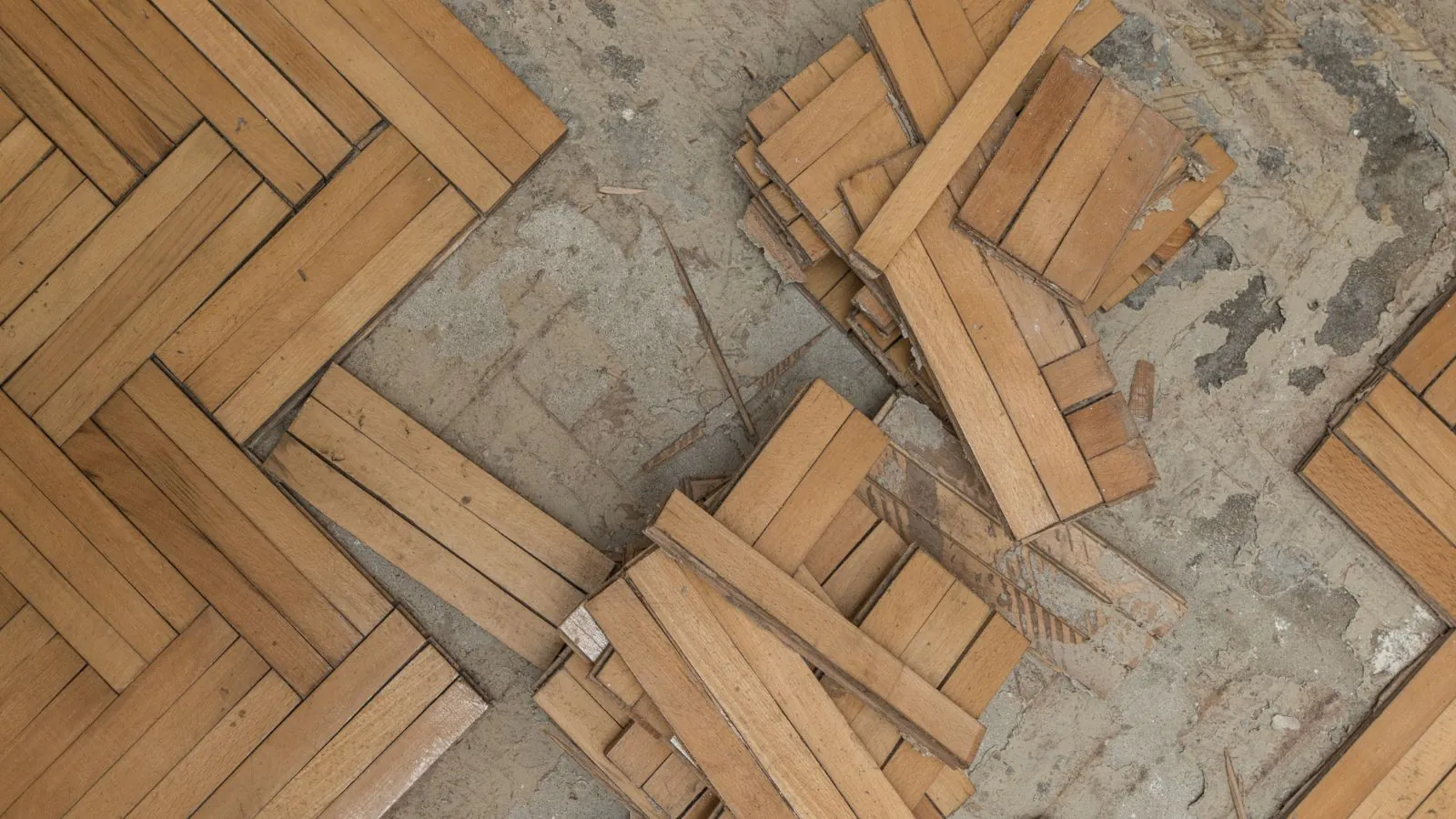
Hardwood floor water damage repair is the drying, assessment and refinishing or replacement of wood and laminate flooring after it has been wet. If your wood floor in Mitchell, SD has gotten wet, call us for a moisture check, since wood can start to cup within a day or two. Quick drying can save floors that would otherwise be replaced.
Lift rugs and furniture off the floor, mop surface water, and leave the floor open to air. Do not use heat guns or space heaters to speed drying, since they can crack wood. Photograph the damage and call.
What water does to wood floors
Wood is hygroscopic, which means it absorbs water. As boards take on moisture they swell, and the edges rise, giving a cupped look. If the top dries faster than the underside, the center can rise, a condition called crowning. Water at seams causes gaps, buckling and finish damage.
The kind of floor matters. Solid hardwood often tolerates drying better than engineered wood or laminate, whose layers or core can swell permanently. Floating floors can trap water underneath the planks, which hides the problem.
How wood floors get dried
A crew measures the moisture in the boards and subfloor, then sets air movers and dehumidifiers. For stubborn wet floors, panels or injection drying mats pull moisture from under the boards, so planks may not need removal. Readings are taken each visit until the floor reaches the same level as dry reference wood.
Drying has a human limit. Boards that cupped heavily may flatten as they dry, but some will not. Wait until the floor is dry and stable before deciding on sanding, since refinishing too early locks in moisture.
| Floor type | Tolerance to water | Typical outcome |
|---|---|---|
| Solid hardwood | Moderate, can often be dried | Dry, then sand and refinish if needed |
| Engineered wood | Lower, layers can separate | Dry attempt, replace if delaminated |
| Laminate | Low, core swells permanently | Often replaced |
| Parquet | Moderate, glue can fail | Dry, re-glue or replace affected pieces |
Sanding, refinishing or replacing
If boards flatten and stay stable, a sand and refinish may bring the floor back. If boards stay cupped, show black staining or have separated, replacing the affected area is the honest answer. Matching existing wood is easier in older homes with solid boards than in homes with discontinued engineered products.
Water often reaches the subfloor, so drying has to include it, as covered on our structural drying and dehumidification page. If the water came from a kitchen leak, the cabinet side is on kitchen water damage restoration.
What affects the cost of hardwood floor water damage repair
Wood floor repair costs vary with the floor and the damage.
- Floor type, solid, engineered or laminate
- Square footage that is wet
- Whether the floor can be dried in place
- Drying days and equipment type
- Sanding, refinishing or board replacement scope
Want your real number?
Sudden water damage is often covered, while long-term moisture damage often is not, so check your policy or ask your insurer. Call and we explain the scope and price before work starts.
Standing water is removed before drying starts, the same way our water extraction crews handle it.
What a good drying plan includes
Wood dries slowly and unevenly, so a plan should include readings on several boards, not one spot. Crews often compare those readings against an unaffected area of the same floor, because wood moisture content varies with the season and the room. Ask which reference reading will be used, and ask to see the numbers at each visit.
Drying too fast can crack boards, and drying too slowly lets them cup. A careful crew adjusts equipment as the readings change, and tells you when waiting a few days is the better choice than sanding early.
Once the floor is dry, any sanding or refinishing should be scheduled after the readings are stable. Refinishing wet wood traps moisture and invites the same problem again.
The professional reference for this work is the ANSI/IICRC S500 standard for water damage restoration, which sorts water by contamination level and sets how materials are dried or removed. Drying goals for wood are measured against a reference reading from unaffected boards, not a single fixed number.
How fast does a wood floor need to be dried?
The sooner the better. Boards start taking on water immediately, and damage becomes harder to reverse over days.
Will my cupped floor flatten on its own?
Sometimes. Cupping can ease as moisture leaves, but the floor should be dried under measurement before any decision about sanding.
Can laminate be saved?
Rarely if the core swelled. Laminate often has to be replaced after soaking.
Should I remove the boards myself?
No. Removal can damage a salvageable floor. Let a crew measure first.
Does insurance cover refinishing?
Sudden water damage may be covered, including floor repair. Read your policy or ask your insurer.