
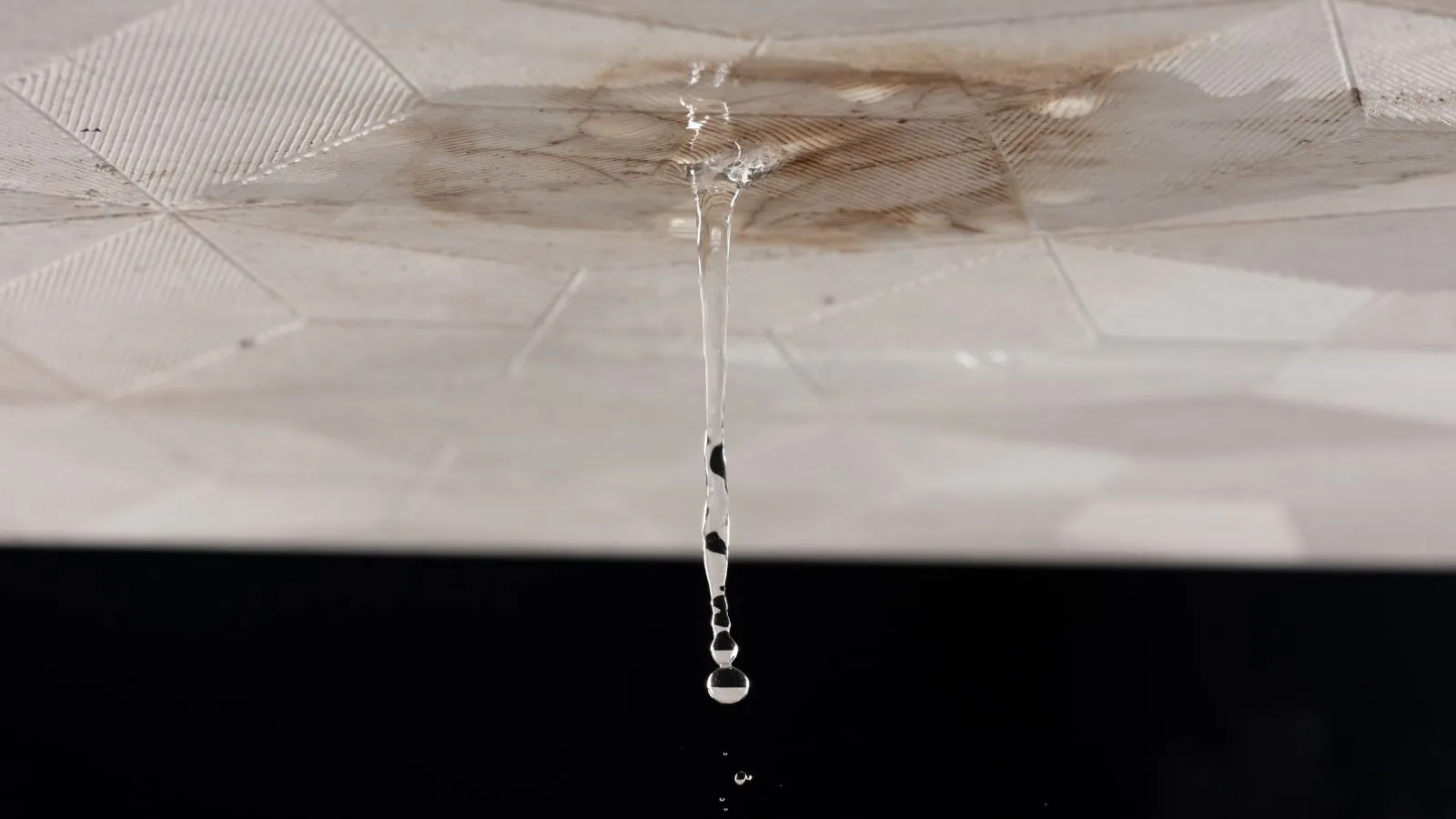
Ceiling water damage repair is the drying, removal and rebuilding of a ceiling that water has soaked, whatever the source above it. If your ceiling in Mitchell, SD is dripping, bulging or showing a spreading stain, treat it as an emergency, keep people out from under it and call our 24/7 line.
The weight of trapped water can bring down drywall without much warning. Move furniture and valuables out of the room if it is safe, put a bucket under active drips, and photograph the ceiling before anything changes. Same-day response is offered when available, nights and weekends included.
When a ceiling stain is an emergency
Sagging or bulging ceilings
A ceiling that bows downward is holding water. Stay out from under it, do not poke it yourself, and tell dispatch what you see. If the water is coming from a plumbing line above, close the main water valve first.
A brown ring that is dry and not growing is an old stain, but it still marks a leak that happened. A damp, spreading or dripping stain means water is still moving. If you cannot tell which you have, call, because a moisture meter answers in seconds what the eye cannot.
What causes ceiling water damage
The ceiling is usually only where the water shows up. Common sources are a roof leak through decking and insulation, a bathroom or laundry above, a supply or drain line in the joist space, and condensation from HVAC equipment in an attic. Each one calls for a different fix to the source, and a restoration crew can tell you what the wetness pattern points to.
Plumbing leaks are covered on our burst pipe water damage page, and air conditioner drips on AC leak water damage. Roof leaks are covered below, since this page owns them.
Roof leak water damage in Mitchell
Roof water damage starts when rain, melting snow or wind-driven water gets under shingles, around flashing or through a chimney or vent boot, and soaks the decking and attic insulation before it reaches the ceiling. By the time a stain appears, the attic has often been wet for a while.
Roof water damage repair has two parts. A roofer repairs or replaces the leaking roof section. We handle the interior side, including removing wet insulation, drying framing, and repairing the ceiling. Ask your roofer to fix the roof first or in step with us, so the new drywall is not wet again next storm.
We are a water damage company, not a roofing contractor, so we do not replace roofs. If a storm damaged the roof and the home at once, storm water damage cleanup explains how the two jobs fit together.
How a wet ceiling is repaired
- Find the source and stop it, with a plumber or roofer as needed.
- Measure moisture in the ceiling, framing, insulation and walls below.
- Remove wet or sagging drywall and wet insulation.
- Dry the cavity with air movers and dehumidifiers until readings are normal.
- Replace insulation, hang and finish drywall, then prime and paint.
The final repair matters for appearance. Textured ceilings need matching, and stain-blocking primer is applied so the old stain does not bleed through new paint. Dried cavities are measured again before they are closed, because covering damp framing is how odor problems begin.
| Ceiling symptom | What it usually means | Action |
|---|---|---|
| Dry brown ring, not growing | Old leak that has stopped | Check with a moisture meter, repair when ready |
| Damp and spreading stain | Active leak or recent wetting | Find the source, call for drying |
| Bulge or sag | Water trapped above drywall | Keep clear, call the emergency line |
| Peeling paint or soft drywall | Prolonged moisture | Remove and dry, then repair |
What affects the cost of ceiling repair
Ceiling jobs range from a patch to a full ceiling replacement. These factors decide.
- The source of the water and whether it is fixed
- Square footage of wet or sagging ceiling
- Wet insulation and framing that need drying or replacement
- Texture, paint and finish work needed to match the room
- Whether the room below also has wet walls or flooring
Want your real number?
Roof leaks and sudden plumbing breaks are often covered, but wear and long-term seepage often are not, so check your policy or ask your insurer. Call and we explain the scope and price before work starts.
The professional reference for this work is the ANSI/IICRC S500 standard for water damage restoration, which sorts water by contamination level and sets how materials are dried or removed. Ceiling water can pick up insulation and dust on the way down, so the category depends on the path it took.
What to do before help arrives
- Stay out from under a bulging or sagging ceiling.
- Place a bucket under active drips and move furniture away.
- Turn off power to the room if lights or fixtures are wet and the panel is dry and reachable.
- Do not poke a bulge unless you are ready for the water behind it to come down.
- Photograph the ceiling and the room above it, if you can reach it safely.
Do you handle ceiling water emergencies at night or on weekends in Mitchell?
Yes. Dispatch is open around the clock. If water is dripping or the ceiling is bulging, keep clear and call. Same-day response is offered when available.
Can a stained ceiling just be painted over?
Only after the cause is fixed and the ceiling is dry. Paint over damp drywall traps moisture and the stain comes back. A stain-blocking primer helps once the material is confirmed dry.
Do you repair the roof too?
No. We repair the interior damage. A roofer fixes the roof, and we coordinate timing so the repaired ceiling is not wetted again.
Will my insurance cover a roof leak that damaged my ceiling?
Sudden roof damage from a storm is often covered, but gradual leaks from wear often are not. Read your policy or ask your insurer, and document the damage before repairs.
How do I know if my attic insulation is wet?
Wet insulation looks flattened or darker, may feel heavy and can smell musty. Do not walk on attic floors you cannot see, and let a crew check it with a moisture meter.