
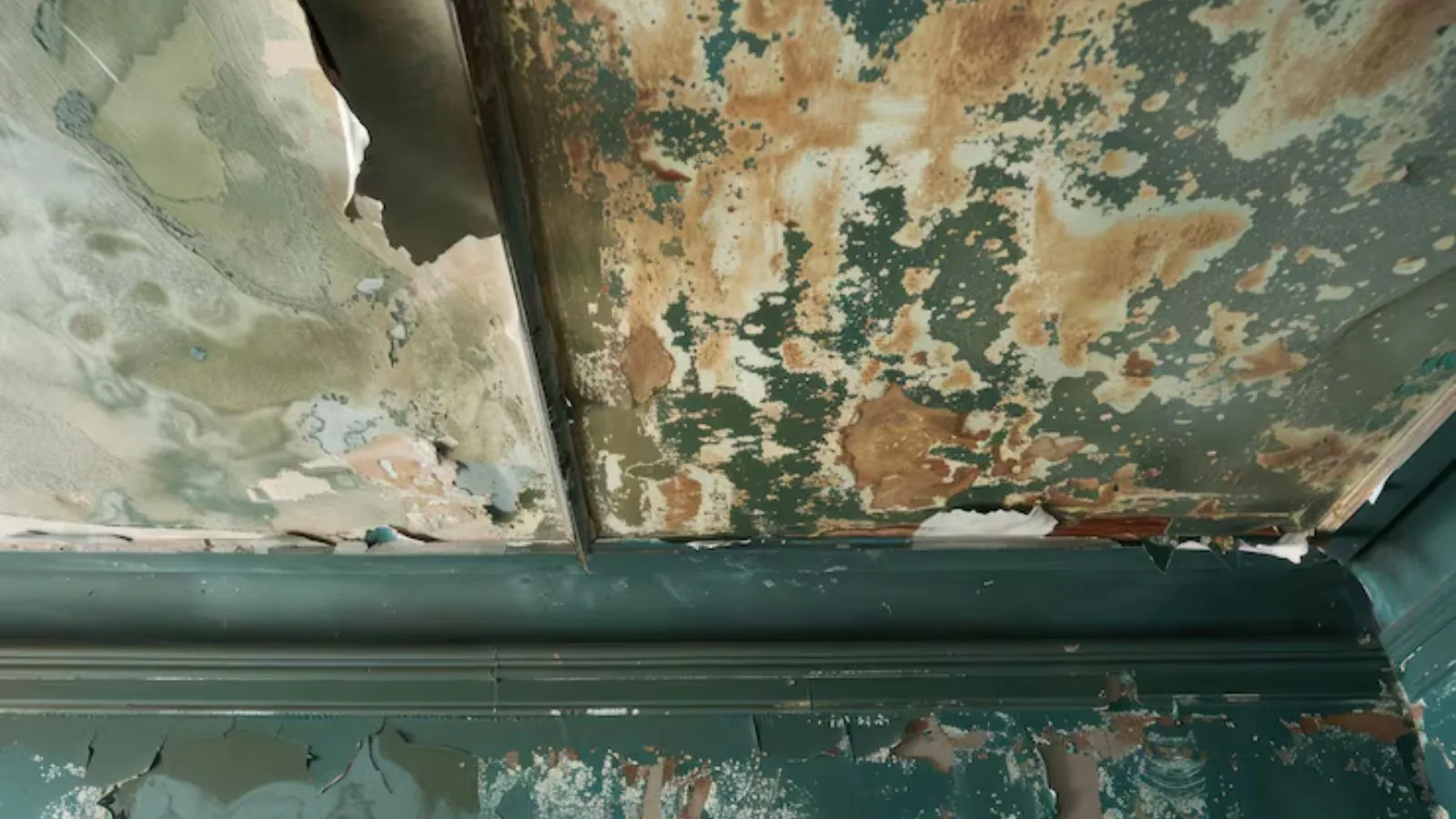
Wall and drywall water damage repair is the drying, removal and replacement of wall materials that water has soaked. If a wall in your Mitchell, SD home is stained, soft, bubbling or swollen at the baseboard, call us for a moisture check. Drywall holds water, and the framing and insulation behind it often stay wet after the surface looks dry.
Look for stains that spread, paint that peels or bubbles, baseboards that swell or pull from the wall, and a musty smell. If water is still entering, find and stop the source first. Then photograph the wall and call.
What water does inside a wall
Drywall wicks water upward, so a wall that sat in an inch of water can be wet much higher inside. Insulation traps moisture against the studs. Baseboards, trim and the bottom plate all take on water, and paint can hide the trouble until it blisters.
The wall cavity is a closed space, and closed spaces dry slowly. That is why a crew measures before deciding. Sometimes drying through small openings is enough. Sometimes a section has to come out, and the honest approach is to cut only what readings justify.
When drywall can stay and when it goes
| Condition | Typical decision | Why |
|---|---|---|
| Clean water, wall damp, drywall firm | Dry in place | Drywall can recover if dried fast |
| Soft, crumbling or sagging drywall | Remove and replace | Strength is gone |
| Wet insulation in the cavity | Remove insulation, dry studs | Insulation holds water |
| Contaminated water | Remove affected drywall | Cannot be reliably cleaned |
| Paint peeling or bubbling | Check moisture, likely remove | Moisture is behind the finish |
A flood cut is a clean horizontal cut made above the water line, typically at a measured height, so wet material below can come out and the rest of the wall stays intact. Cutting to the readings keeps rebuilding costs down.
Walls in older and unusual Mitchell homes
Mitchell has a historic residential area on the National Register, the Mitchell West Central Residential Historic District, listed in 1999, and a Lustron historic district with three prefabricated steel homes along Vincent Place, listed in 1998. Older plaster and steel-panel walls behave differently from modern drywall, so tell the crew what your wall is made of before they cut.
How the repair is finished
After drying, new insulation goes in, drywall is hung and finished with tape and joint compound, and the wall is primed and painted. Stain-blocking primer helps keep old marks from bleeding through. Painting an entire wall instead of a patch avoids a visible color difference.
Walls usually get wet from above or below, which links this page to ceiling water damage repair and to burst pipe water damage. If a wall stays damp after the repair, the structural drying page explains what the readings should show.
What affects the cost of wall and drywall water damage repair
Wall repair costs vary with how much material is involved.
- Height and length of the wet wall
- Insulation and framing that must be dried or replaced
- Whether baseboards, trim and doors are affected
- Paint, texture and finish matching
- Drying days and equipment
Want your real number?
Sudden water damage is often covered by homeowners insurance, while gradual leaks often are not, so check your policy or ask your insurer. Call and we explain the scope and price before work starts.
Deciding between drying and replacing drywall
Drywall that was briefly wet with clean water can sometimes be dried in place, while drywall that sat saturated, swelled or crumbled is usually cut out and replaced. The decision rests on readings and on the condition of the paper facing, not on how the wall looks from the room.
Insulation inside the wall is part of the same decision. Wet insulation holds water against the framing, so it is often removed even when the board is saved. Ask the crew to show you what is inside before it is closed up again.
After the wall is dry, finishing is a separate job: new board, taping, texture and paint. Expect the finish work to wait until readings are stable.
The professional reference for this work is the ANSI/IICRC S500 standard for water damage restoration, which sorts water by contamination level and sets how materials are dried or removed. Drywall decisions rest on the water category and on how long the board stayed wet.
What to do before help arrives
- Shut off the water source.
- Keep outlets in wet walls switched off and do not plug anything into them.
- Move furniture away from the wall so air can reach it.
- Do not paint or seal a wet wall.
- Photograph the wall with a ruler or tape for scale.
In a district such as West Central, where the National Register lists houses built from about 1883 to 1938, a crew checks each wall for moisture before deciding what to replace.
Can wet drywall be dried instead of replaced?
Sometimes, if the water was clean, the drywall is still firm and it is dried quickly. Soft or crumbling drywall should be replaced.
Why cut the wall open if it looks dry?
Surface dryness does not show moisture in the cavity. Meters and thermal cameras guide where to cut.
Will paint hide a water stain?
Not until the cause is fixed and the wall is dry. Use a stain-blocking primer after drying.
Do baseboards need to be replaced?
Often they can be removed, dried and reinstalled. Swollen or warped trim is usually replaced.
How long does wall repair take?
Drying takes days, followed by drywall, finishing and paint, which adds more days. Your crew can give a schedule once readings are in.