
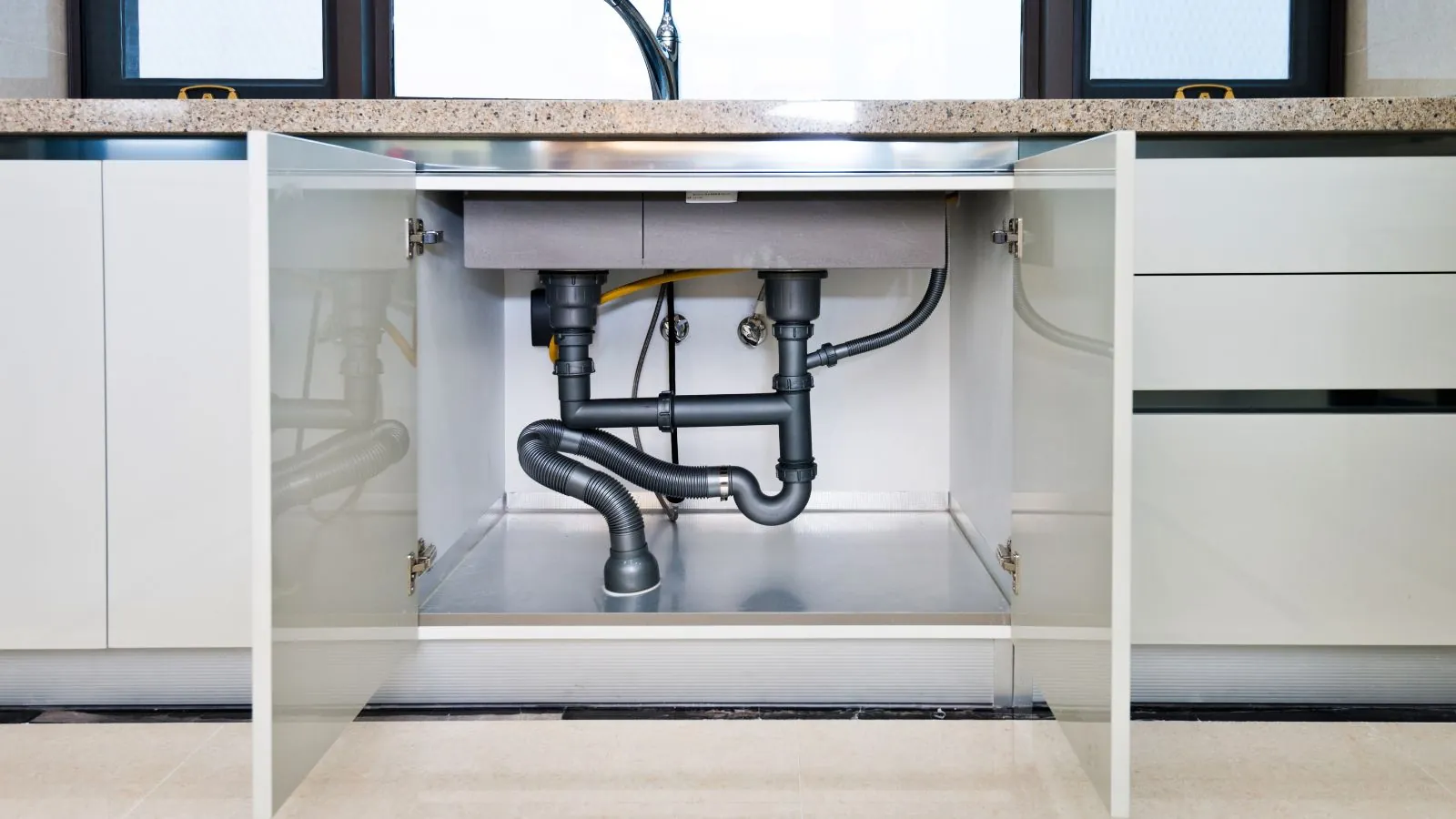
Kitchen water damage restoration is the drying and repair of cabinets, floors, countertops and walls after water gets into a kitchen. If you see water under the sink, swollen cabinet bases or a soft floor near the dishwasher in your Mitchell, SD home, call us for a moisture check and drying plan. Kitchens hold many materials that react badly to water, so early attention matters.
Shut off the supply valve under the sink or the dishwasher valve, mop what you can, and empty cabinets of items that hold moisture. Photograph the damage first. Kitchen leaks are often slow, so the damage can be larger than it looks.
Where kitchen water damage starts
- Under-sink supply lines and drain connections.
- Dishwasher hoses, door seals and drain lines.
- Faucet leaks that drip into the cabinet below.
- Refrigerator ice maker lines, covered in more detail on our appliance leak water damage page.
- Roof or ceiling leaks that reach upper cabinets.
Under-sink leaks are especially common because the connections sit in a closed, rarely checked cabinet. A slow drip can saturate the cabinet floor and spread under the countertop edge long before a stain appears.
Cabinets, toe kicks and countertops
Particleboard and MDF cabinet boxes swell when wet and rarely return to shape. Solid wood and plywood recover better. The toe kick, the board at the base of a cabinet run, traps water against the floor, so it is often removed to dry the space behind it.
Laminate countertops with particleboard cores can swell at the edges and seams. Stone and solid-surface tops usually survive, though their supports might not. A crew checks each material with a moisture meter before deciding what stays.
Flooring under and around cabinets
Water travels under cabinets to flooring that cannot be seen. Vinyl and tile usually survive if the subfloor dries, while wood and laminate may need the steps on our hardwood floor water damage repair page. Drying under cabinets is done through the toe kick or small access holes, so removal can be minimal.
| Material | How it reacts to water | Typical outcome |
|---|---|---|
| Particleboard or MDF cabinet box | Swells and loses strength | Often replaced |
| Plywood or solid wood cabinets | Can dry in place if caught early | Often saved |
| Laminate countertop | Edges and seams swell | Often replaced if swollen |
| Tile or vinyl floor | Water goes to the subfloor | Often saved if the subfloor dries |
| Drywall behind the sink | Wicks water upward | Dried or cut out depending on readings |
The rebuild can include new cabinet parts, drywall behind the sink wall and paint. Ask your crew about matching existing finishes before ordering parts. If a pipe break was the cause, the process on our burst pipe water damage page may also apply.
What affects the cost of kitchen water damage repair
Kitchen jobs vary with materials. These factors set the scope.
- How long the leak ran before it was found
- Cabinet material and how many runs are wet
- Countertop type and whether it must be removed
- Flooring type and subfloor condition
- Drying days and equipment
Want your real number?
Sudden kitchen leaks are often covered, while slow leaks from maintenance neglect often are not, so check your policy or ask your insurer. Call and we explain the scope and price before work starts.
Cabinets, toe kicks and what hides behind them
Kitchens hide water well. The base of cabinets sits on a toe kick, a hollow strip where water collects, and behind the dishwasher and refrigerator the wall and floor can stay wet long after the visible area looks fine. Crews often remove toe kick panels to dry that space and read moisture behind them.
Ask whether cabinet boxes are particleboard or solid wood, because particleboard swells and rarely recovers once soaked. Countertops and appliances are usually not the problem. The material under them is.
Photograph the kitchen before anything is moved, including the inside of the sink cabinet and the area behind the fridge. Those photos help show the source and the timing.
The professional reference for this work is the ANSI/IICRC S500 standard for water damage restoration, which sorts water by contamination level and sets how materials are dried or removed. Kitchen leaks usually start as clean water, and the category can change if it runs through cabinets and trash.
What to do before help arrives
- Close the shut-off under the sink, or the main valve.
- Unplug small appliances only if the outlets and the floor are dry.
- Empty the cabinets under the sink so they can be checked and dried.
- Do not use heat to dry cabinets quickly, since it can cause cracks.
- Photograph the cabinets, the floor and the source.
Is a leak under the kitchen sink an emergency?
If water is actively running, shut off the supply valve and call right away. Our dispatch line is open 24 hours. A slow drip is less urgent but should still be checked.
Can swollen cabinets be saved?
Solid wood and plywood often can. Particleboard rarely returns to shape once it swells.
Do you remove the toe kick to dry under cabinets?
Often, yes. That gives access to the space behind the cabinet base without removing the whole cabinet.
Will insurance cover cabinet replacement?
Sudden leaks are often covered, while long-term seepage often is not. Read your policy or ask your insurer.
How do I know if the subfloor is wet?
A moisture meter tells you. Visible clues include a soft spot, a cold floor or a musty smell near the cabinets.