
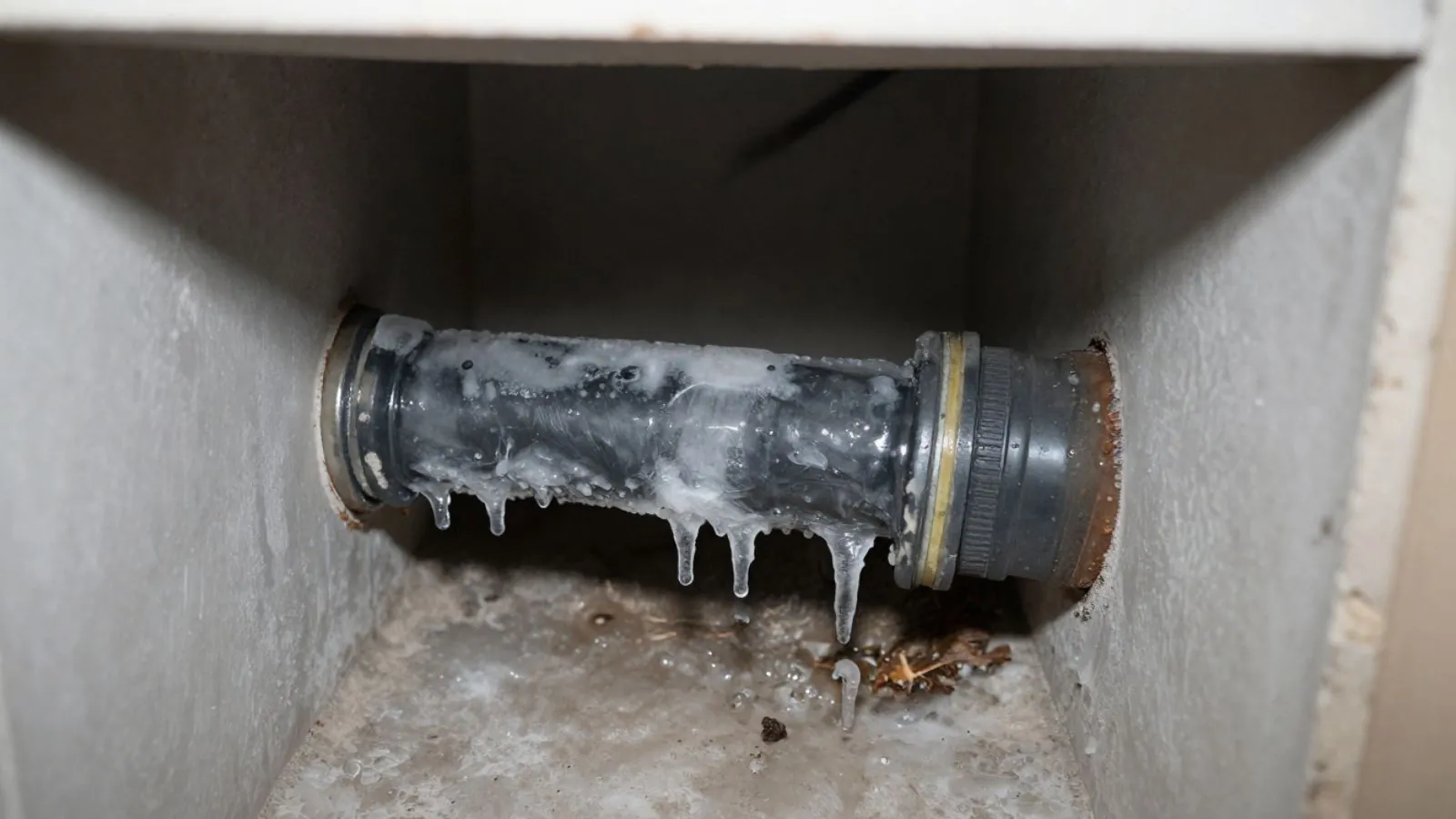
Frozen pipe water damage happens when ice blocks a line, the pipe splits, and the water pours out as the ice thaws. If you have a frozen or thawing pipe in Mitchell, SD, close the main water valve right away and call our 24/7 line, because a split pipe can release water the moment the temperature rises.
The danger often arrives after the cold snap, not during it. A pipe can crack under ice pressure and stay sealed by the plug until the ice melts, so a quiet wall one morning can be a flood that afternoon. Same-day response is offered when available, nights and weekends included.
Frozen pipe emergency: what to do when a pipe is frozen or just thawed
- Close the main water shutoff before anything starts to run.
- Open the faucet on the affected line so melting water has somewhere to go.
- Never use an open flame or a torch on a frozen pipe. A hair dryer on low or a space heater placed safely nearby is the safer approach.
- Look for a wet spot, a bulge, a frost line or a hiss in the wall, and call a plumber if you see one.
- Call our line if water is already on the floor, and photograph it first.
Where pipes freeze in a house
Freezing happens where heat does not reach. Typical spots are pipes in exterior walls, lines in crawl spaces and unheated basements, garage supply lines, and pipes in attics or against uninsulated rim joists. A home that stays warm in the living room can still have a frozen line three feet behind a cabinet.
South Dakota winters are cold enough that this is a real risk for any unheated pipe, so the National Weather Service forecast for the Sioux Falls region is worth checking before a cold stretch. Mitchell homes with older plumbing, including those in the historic residential areas, benefit from a plumber's look at exposed runs before winter.
How the water damage gets repaired
The plumber replaces the split section. The restoration crew extracts standing water, then checks moisture in walls, floors and the ceiling below with meters and thermal imaging. Because a frozen pipe often sits inside a wall, drywall and insulation are commonly opened for inspection.
Drying follows with air movers and dehumidifiers, set until the readings match dry reference materials. Cold weather matters here, because a building with heat turned down to save money dries slowly. The crew will tell you what temperature and humidity the job needs.
| What you see | Likely cause | First move |
|---|---|---|
| No water at one faucet in cold weather | Ice plug in the supply line | Open the tap, warm the area safely, call a plumber |
| Wet drywall or a stain growing on a wall | Split pipe thawing inside the wall | Close main valve, call both a plumber and our line |
| Dripping ceiling after a warm-up | Attic or upstairs line split | Close main valve, see ceiling water damage repair |
| Water in a basement or crawl space | Line split in an unheated space | Close main valve, call for extraction |
Preventing a repeat
Insulate exposed pipes, seal gaps where cold air enters near supply lines, open cabinet doors on exterior walls during hard freezes, and let a faucet drip on the coldest nights. Disconnect garden hoses before winter, since a frozen hose bib can crack the line behind it.
If the pipe froze because of a heating failure or a home left cold, note that in your claim documentation. The cause of the damage matters to insurers, and the South Dakota Division of Insurance advises homeowners to file promptly and keep records of every conversation.
What affects the cost of frozen pipe damage
A frozen pipe loss ranges from one wet wall to a flooded floor. These factors drive the number.
- How much water ran before the shutoff and where it traveled
- Whether the break was in an exterior wall, a ceiling or a basement
- Wet drywall, insulation, flooring and cabinets that must be removed
- Heating and drying time in cold conditions
- Rebuild scope after the structure is dry
Want your real number?
Sudden and accidental water damage is often covered by homeowners insurance, while damage from neglect often is not, so check your policy or ask your insurer. Call for a number tied to your loss and we explain the scope and price before work starts.
The same crews also work from water extraction through to repair, so the whole job stays under one plan.
The professional reference for this work is the ANSI/IICRC S500 standard for water damage restoration, which sorts water by contamination level and sets how materials are dried or removed. A split pipe that thaws overnight often starts as clean water, and the drying plan follows from that category.
Once the pipe has split, the cleanup follows the same steps as water extraction, and drying wall cavities is covered under structural drying and dehumidification.
Do you handle frozen pipe emergencies at night or on weekends in Mitchell?
Yes. Dispatch answers around the clock. If a pipe has split and is running, close the main valve and call. Same-day response is offered when available.
Is it safe to thaw a frozen pipe myself?
Gently, yes. Open the faucet, then warm the pipe with a hair dryer on low or warm air from a safely placed heater. Never use an open flame. If you see a crack, a bulge or water, shut off the main and call a plumber.
Why did my pipe only leak after the weather warmed up?
Ice can crack a pipe and also plug the crack. When the ice melts, water flows through the split. That is why leaks often show up during a warm-up.
Does insurance cover frozen pipe damage?
Sudden freeze breaks are often covered, but wording and exclusions differ, especially for vacant or unheated homes. Read your policy or ask your insurer, and document the loss with photos.
How cold does it have to get for pipes to freeze?
It depends on wind, insulation and where the pipe runs. Exposed pipes in unheated spaces face risk any time temperatures stay below freezing for long stretches, so check forecasts and protect vulnerable runs.