
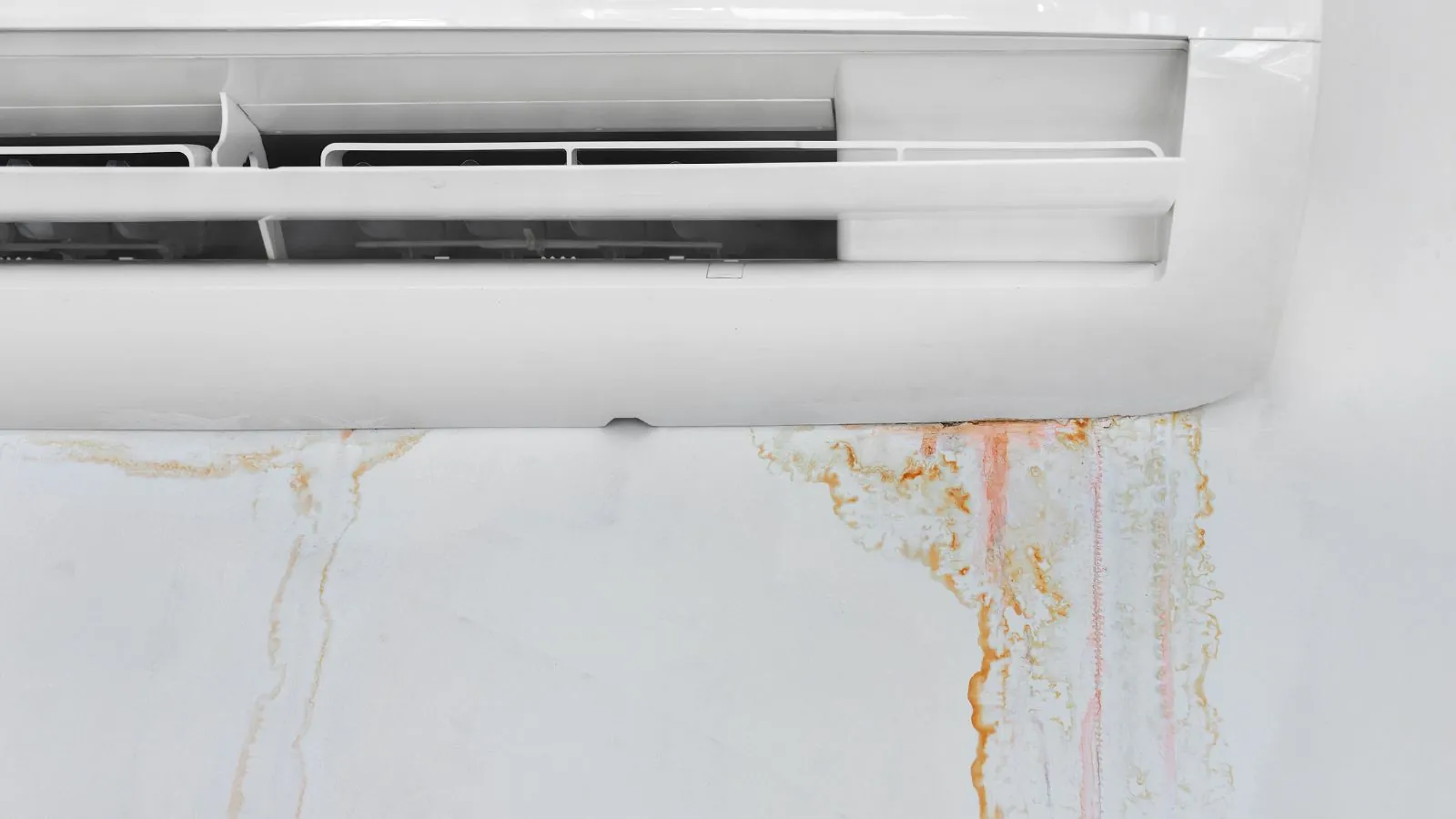
AC leak water damage is the wetting of ceilings, walls and floors by condensate from an air conditioning system that has overflowed or leaked. If your system in Mitchell, SD is dripping, turn it off at the thermostat, then call us for drying and repair. The unit keeps making water as long as it runs.
Air conditioners remove moisture from indoor air, and that water is supposed to leave through a drain line. When the line clogs or the pan cracks, the water goes somewhere else. Most of these leaks are slow, so the damage is often found late.
Why air conditioners leak
- A clogged condensate drain line from algae, dust or debris.
- A rusted or cracked drain pan under the coil.
- A frozen evaporator coil that melts and overflows the pan.
- A drain line that slopes the wrong way or has come loose.
- Dirty filters or low refrigerant that let the coil ice over.
Mitchell summers can be humid, and a system working hard makes more condensate, so a marginal drain line shows its weakness in July. A mini-split or a unit in an attic puts the water inside the ceiling or wall before it ever reaches the floor.
What AC water damage looks like
The usual sign is a stain, often yellow or brown, on a ceiling below an attic air handler or on a wall near an indoor unit. Other signs are water around a closet furnace, a musty smell in the room, or bubbling paint. Rust-colored streaks suggest the water has been moving for a while.
Because the source is a condensate line and not a pressurized pipe, the water is typically clean and arrives slowly. The risk is time. A leak that runs for weeks soaks insulation and drywall far beyond the visible stain.
How the damage is repaired
An HVAC technician fixes the drain, pan or coil, since that is their trade and not ours. We then check moisture in the ceiling, wall and insulation with meters, open anything that stays wet, and dry the cavity with air movers and a dehumidifier. If the stain is a ceiling, the ceiling water damage repair process applies.
Wet insulation is removed and replaced because it loses value when it stays wet. Once dry, drywall is repaired, primed with a stain blocker and painted. The AC contractor should confirm the drain works before the wall is closed, or the repair gets wet again.
| Where the unit sits | Where the water shows | What to check |
|---|---|---|
| Attic air handler | Ceiling below the unit | Insulation, ceiling joists, light fixtures |
| Closet or utility room | Floor and adjoining wall base | Flooring seams, baseboards |
| Wall mounted indoor unit | Wall below the unit | Drywall, baseboards, carpet edge |
| Basement air handler | Floor around the unit | Concrete, stored items, wall bases |
What affects the cost of AC leak repair
These factors move the number on an AC condensate loss.
- How long the system leaked before the problem was found
- Whether the damage is a spot or a large ceiling area
- Wet insulation and framing
- Drying days and equipment
- Painting and texture work to match the room
Want your real number?
Sudden AC overflow is sometimes covered while slow leaks from lack of maintenance often are not, so check your policy or ask your insurer. Call and we explain the scope and price before work starts.
Where an AC line is hidden in an attic, the same moisture can reach the walls, so the wall and drywall water damage repair page covers that spread.
The professional reference for this work is the ANSI/IICRC S500 standard for water damage restoration, which sorts water by contamination level and sets how materials are dried or removed. Condensate water is clean at the source, but a drain pan can carry dust and algae, so the plan checks what the water touched.
What to do before help arrives
- Turn the air conditioner off at the thermostat so it stops producing water.
- Place a bucket under the drip and move belongings out from under it.
- Do not touch a ceiling that is sagging, since it can drop with water behind it.
- Stay away from light fixtures and outlets that are wet.
- Photograph the stain, the unit and the drain line before anything is moved.
If the drip has already stained a ceiling, see ceiling water damage repair, and for damp insulation or framing above it, structural drying and dehumidification explains how drying is confirmed.
Is an AC leak an emergency?
It becomes one if water is dripping through a ceiling or reaching electrical fixtures. Turn the system off, keep clear of a bulging ceiling and call. Otherwise, call soon, since slow leaks keep soaking materials.
Can I fix a clogged condensate line myself?
Some homeowners flush the line with a wet vac or a vinegar solution, but an HVAC technician is the right person if the pan is cracked or the coil is frozen.
Will the stain come back after painting?
Not if the source is fixed and the material is dry. A stain-blocking primer also helps before paint goes on.
Does insurance cover water damage from an air conditioner?
Sudden overflow is sometimes covered, but damage from slow leaks or poor maintenance often is not. Read your policy or ask your insurer.
How can I tell if my attic insulation got wet from the AC?
Look for flattened, dark or heavy insulation under the unit. A moisture meter gives a reliable answer, and a crew can check it safely.