
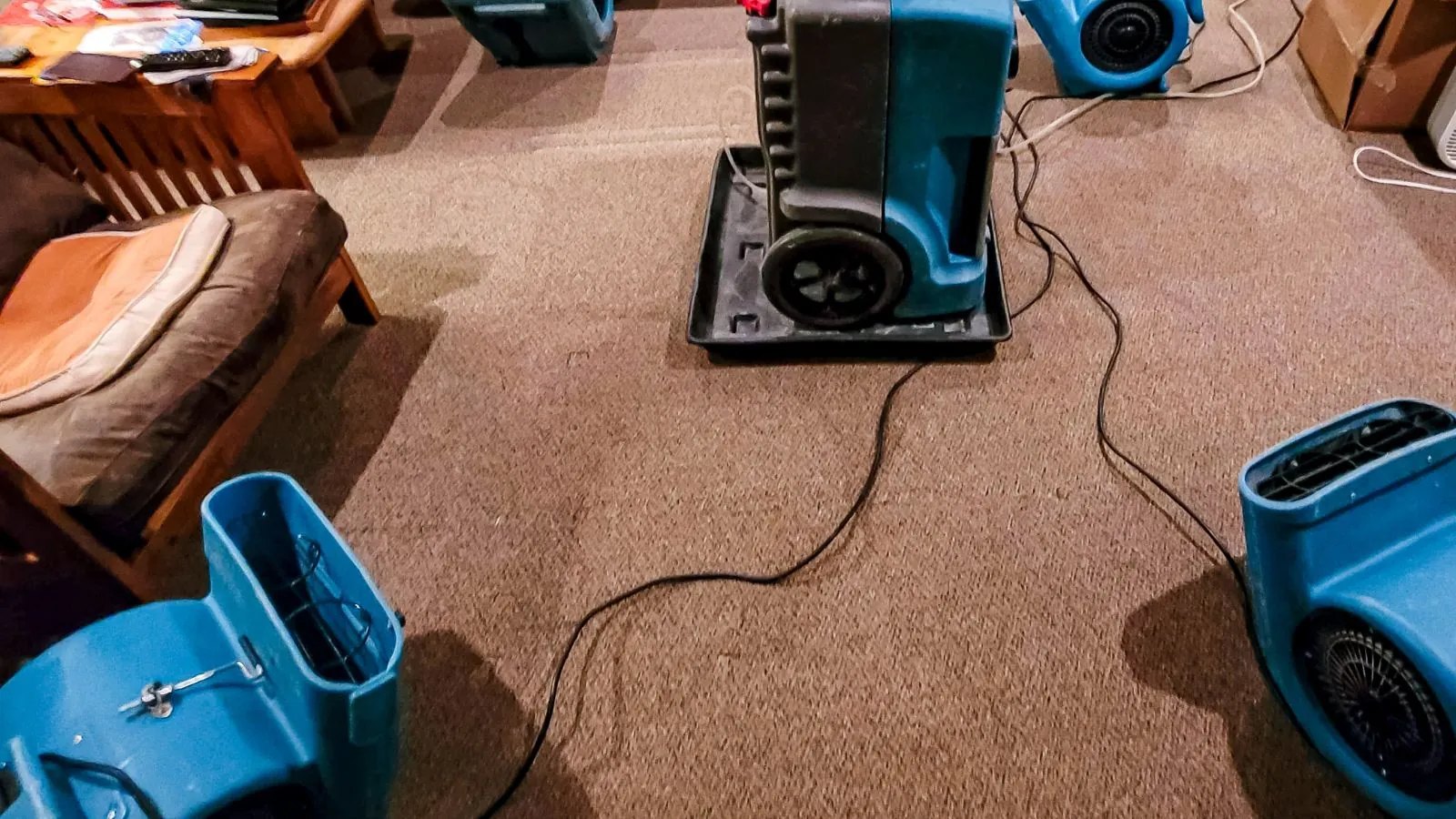
Structural drying and dehumidification is the controlled removal of moisture from walls, floors, framing and air using meters, air movers and dehumidifiers. If your Mitchell, SD home or building was wet and still feels damp, a moisture check can show what is still holding water. Drying is the step that decides whether a loss ends cleanly or turns into odor and warping.
Surface dryness fools people. Drywall can feel dry on the face while the framing behind it is wet. This page explains how drying is measured, what equipment does, and how long the process tends to take.
Still damp, musty or warm after the water is gone?
The symptoms people describe are plain ones. A wall that feels cool and clammy, carpet that never quite dries, a stuffy smell in a room after a leak, baseboards that are starting to swell, or a window that fogs from the inside. Each of these points to moisture left in materials or air.
The fix is a trade term, structural drying. A crew measures what is wet, sets equipment to move and remove moisture, and checks progress each day until readings reach a dry standard. If you can answer yes to any of the symptoms above, a moisture inspection is the right next step.
What water mitigation means
Water mitigation is the work done to stop a water loss from getting worse, and it includes stopping the source, removing standing water, removing materials that cannot be saved and drying what stays. Drying is the longest part of it. Mitigation is separate from repair, which is the rebuild after everything is dry.
How moisture mapping works
A technician uses a pin or pinless moisture meter to read wood, drywall and concrete, and a thermal camera to spot cool wet areas behind finishes. Readings are marked, logged and compared against a dry reference on an unaffected part of the same building. Those readings become the drying goal.
Mapping is repeated on each visit. Falling numbers show the plan is working, and flat numbers mean something needs to change, such as adding a dehumidifier or opening a wall cavity.
Equipment that does the drying
| Equipment | What it does | Where it is used |
|---|---|---|
| Air movers | Push air across wet surfaces to speed evaporation | Floors, wall bases, carpet, subfloor |
| LGR dehumidifiers | Pull moisture out of the air so surfaces keep releasing water | Whole rooms and sealed work areas |
| Injection drying mats | Drive air into floors or wall cavities | Hardwood, subfloor, cabinets |
| Moisture meters and thermal cameras | Find and track wet materials | Every job, every visit |
Drying works as a system. Air movers alone push humid air around, and dehumidifiers alone leave pockets wet. Doors and windows stay closed in the work area so the equipment removes the moisture instead of fighting the outdoors.
How long does drying take
Many jobs take several days, though thick materials, hardwood, concrete and wall cavities can take longer. The timeline depends on how wet the structure was, the temperature and humidity inside, and how much airflow the crew can set. Industry practice follows ANSI/IICRC S500, and you can ask any company whether its crews work to it.
Do not shut equipment off early because it is loud or costs electricity. Equipment is removed when readings show the materials are dry. Skipping that check is how hidden dampness leads to odor and warped flooring later. If drywall behind a wall stays wet, the wall and drywall water damage repair page explains what opens up.
Drying depends on a good start. Standing water must come out first, as our water extraction crews do, and flooring materials may need the specific approach on the carpet water damage restoration page.
What affects the cost of structural drying
Drying is billed around equipment and time. These are the main factors.
- Number of rooms and the square footage that is wet
- Materials, since hardwood and concrete dry slowly
- Number of air movers and dehumidifiers needed
- Days of drying and the number of monitoring visits
- Whether materials had to be removed first
Want your real number?
Drying after sudden and accidental water damage is often covered by homeowners insurance, while long-term seepage often is not, so check your policy or ask your insurer. Call for a real number and we explain the scope and price before work starts.
What to do before the drying crew arrives
- Keep doors and windows closed in the area being dried unless the crew says otherwise.
- Do not turn the heat up high, since warm wet air does not dry anything.
- Leave the equipment running and plugged in once it is set up.
- Keep children and pets away from the equipment and its cords.
- Write down any new stains or odors and tell the crew at the next visit.
Why does my house still feel damp after the water was cleaned up?
Water extraction removes standing water, but moisture stays inside drywall, wood and concrete. Drying equipment is what removes it, and a moisture meter tells you when it is done.
Do I need a dehumidifier or are fans enough?
Fans alone move humid air around. A dehumidifier takes moisture out of it. Both are used together on a real water loss.
How loud is the equipment and can I stay home?
Air movers and dehumidifiers are noticeable, so many people find it hard to sleep near them. Whether you can stay depends on the damage and the water source, so ask your crew.
How do I know when drying is finished?
Readings on wet materials match the dry reference taken from unaffected materials. The crew logs the numbers so you can see the trend.
Will drying prevent mold?
Fast, complete drying lowers the risk because mold needs moisture. No company can promise it will never appear, and mold concerns belong with a qualified professional.