
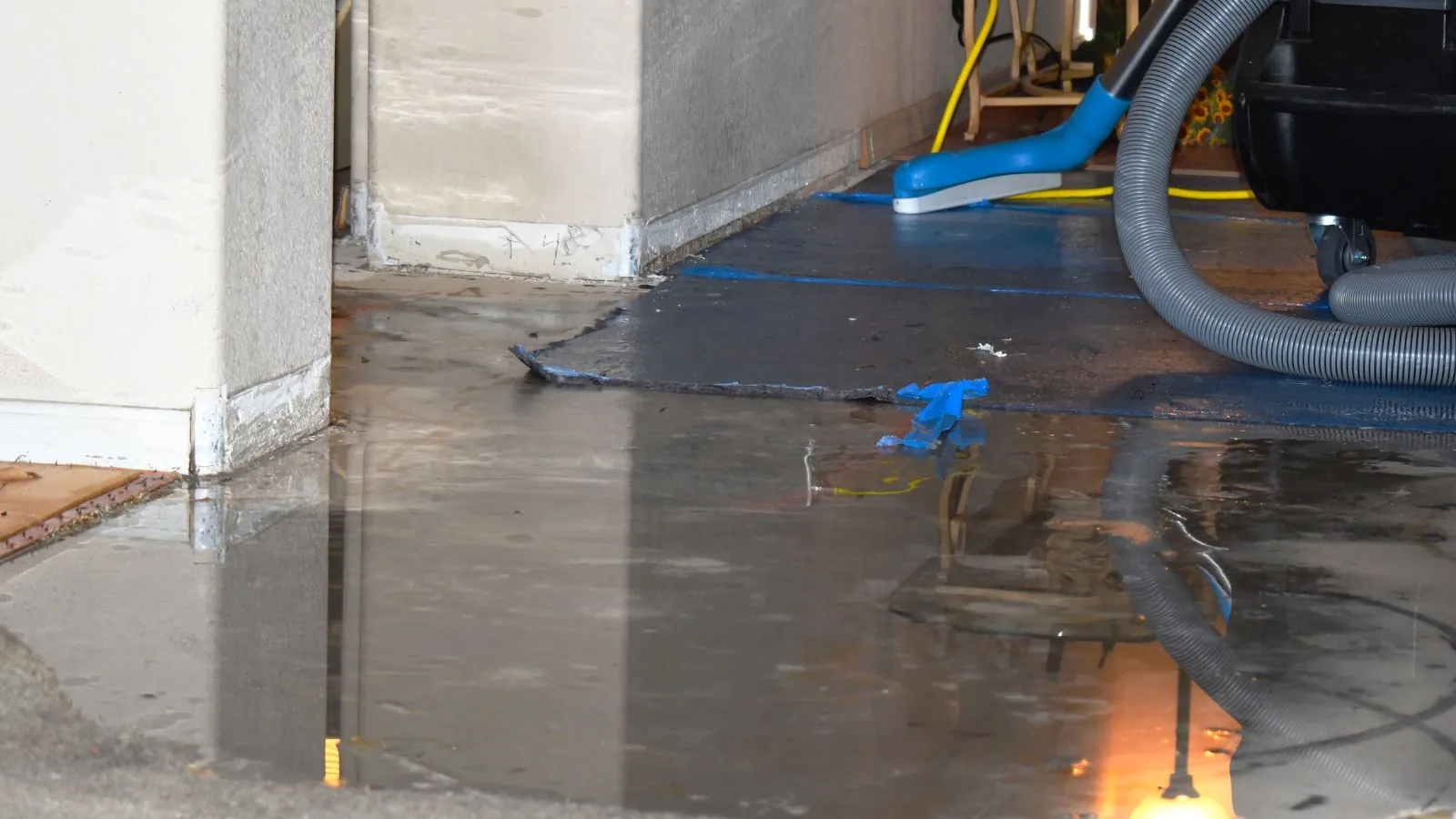
Water extraction is the removal of standing water from floors and structures with pumps and extraction units, and it is the first real step in any Mitchell, SD water loss. If water is pooled on your floor, call our 24/7 dispatch line now, because every hour of delay pushes moisture further into drywall, subfloor and cabinet bases.
While you wait for a crew, stop the source if you can, shut off the main water valve for a plumbing leak, and lift valuables, rugs and electronics off the floor. Keep people and pets out of the water if outlets, appliances or a panel could be wet. Same-day response is offered when available, and after-hours calls are normal for this kind of work.
When standing water is an emergency
Clean water from a supply line turns into a harder problem the longer it sits. Within a day it can soak the pad under carpet, wick up the base of walls and reach the underside of flooring. Water that came from outside, from a sewer line or from a failed sump pump should be treated as contaminated from the first minute.
In June 2024 the National Weather Service in Sioux Falls recorded 8.55 inches of rain at Mitchell over three days, the highest three-day total on its record for the city and well above the 7.08 inches from the September 2019 storm. Rain on that scale is the kind of event that puts water into basements and ground floors faster than a household can respond, so a call to a crew with pumps is the right first move.
How extraction works
The crew starts by finding where the water is and how deep it sits. Submersible pumps handle deep water, then truck-mounted or portable extraction units pull water out of carpet, pad and hard floors. Wand tools with strong vacuum reach the last film of water on a floor.
Moisture meters and thermal cameras then show what the eye misses. Water travels sideways under baseboards and into wall cavities, so extraction is followed by a moisture map before anyone decides what comes out and what can dry in place.
| Situation | What extraction involves | What to expect next |
|---|---|---|
| Clean supply line water on carpet | Extraction units on carpet and pad, pad often lifted | Air movers and a dehumidifier, often the carpet saved |
| Standing water on a hard floor | Pump and wand extraction, squeegee passes | Moisture check of subfloor and baseboards |
| Basement with a few inches of water | Submersible pump, then extraction of the film | Wall and stored-item check, drying equipment set |
| Water that came from outside or a sewer | Extraction with protective gear, contaminated materials removed | Cleaning and sanitizing before any rebuild, see sewage backup cleanup |
Safety before the pumps arrive
Water and electricity
If water has reached outlets, a power strip or the electrical panel, do not walk into it. Cut power only if you can reach the panel while standing on dry ground. Call the utility or 911 for any electrical or gas concern before you call us.
Do not use a household vacuum on water, and do not run ceiling fans or space heaters in a wet room. Open interior doors if the area is dry and safe, and photograph everything before you move it. Those photos support an insurance claim later.
What happens after the water is out
Extraction removes the bulk water, not the moisture inside materials. The next job is structural drying and dehumidification, where air movers and dehumidifiers dry the wood, drywall and subfloor to target readings. Skipping that step is how hidden dampness turns into odor and warped flooring weeks later.
If the loss started with a pipe, the plumber fixes the pipe and the restoration crew handles the water. A split line is covered on our burst pipe water damage page. If the water came up from the ground in a heavy rain, flood damage cleanup explains how contaminated water changes the plan.
What affects the cost of water extraction
No honest price exists before someone sees the loss. These are the factors that move the number.
- The category of water: clean, gray or contaminated
- How much floor area is wet and how deep the water is
- Materials involved, such as carpet and pad, hardwood, drywall or insulation
- How many days of drying equipment the building needs
- Whether rebuild work follows the water removal
Want your real number?
Sudden and accidental water damage is often covered by a homeowners policy, while gradual leaks and neglect often are not. Check your policy or ask your insurer. For a real number on your loss, call and we explain the scope and price before work starts.
Serving Mitchell and nearby towns
Crews work across Mitchell and the towns around it, including Ethan to the south. Tell dispatch your cross streets or the nearest landmark, such as the Corn Palace or Dakota Wesleyan University, and they will route the call.
The professional reference for this work is the ANSI/IICRC S500 standard for water damage restoration, which sorts water by contamination level and sets how materials are dried or removed. Extraction depth and equipment follow the category and the materials the water reached.
Do you handle water extraction emergencies at night or on weekends in Mitchell?
Yes. The dispatch line is open 24 hours a day, every day of the year. Call, describe where the water is, and we work out the next step with you. Same-day response is offered when available.
Can I just use a wet vac on standing water?
A shop vacuum rated for wet pickup can handle a small spill on a hard floor. It does not remove water from carpet pad, subfloor or wall bases, and it is unsafe if outlets are wet. For anything bigger than a spill, call a crew.
How long does water extraction take?
Pulling standing water usually takes hours rather than days, depending on depth and floor area. The longer job is drying, which often runs several days. Your crew will tell you what the moisture readings show.
Will you tell me the price before starting?
Yes. We explain the scope and price before work starts. Insurance coverage is a separate question, so check your policy or ask your insurer.
What should I photograph before the crew arrives?
Take wide photos of each wet room, close photos of the water line on walls and furniture, and a short video if you can. Do this before moving belongings, and keep receipts for any temporary steps you take.