
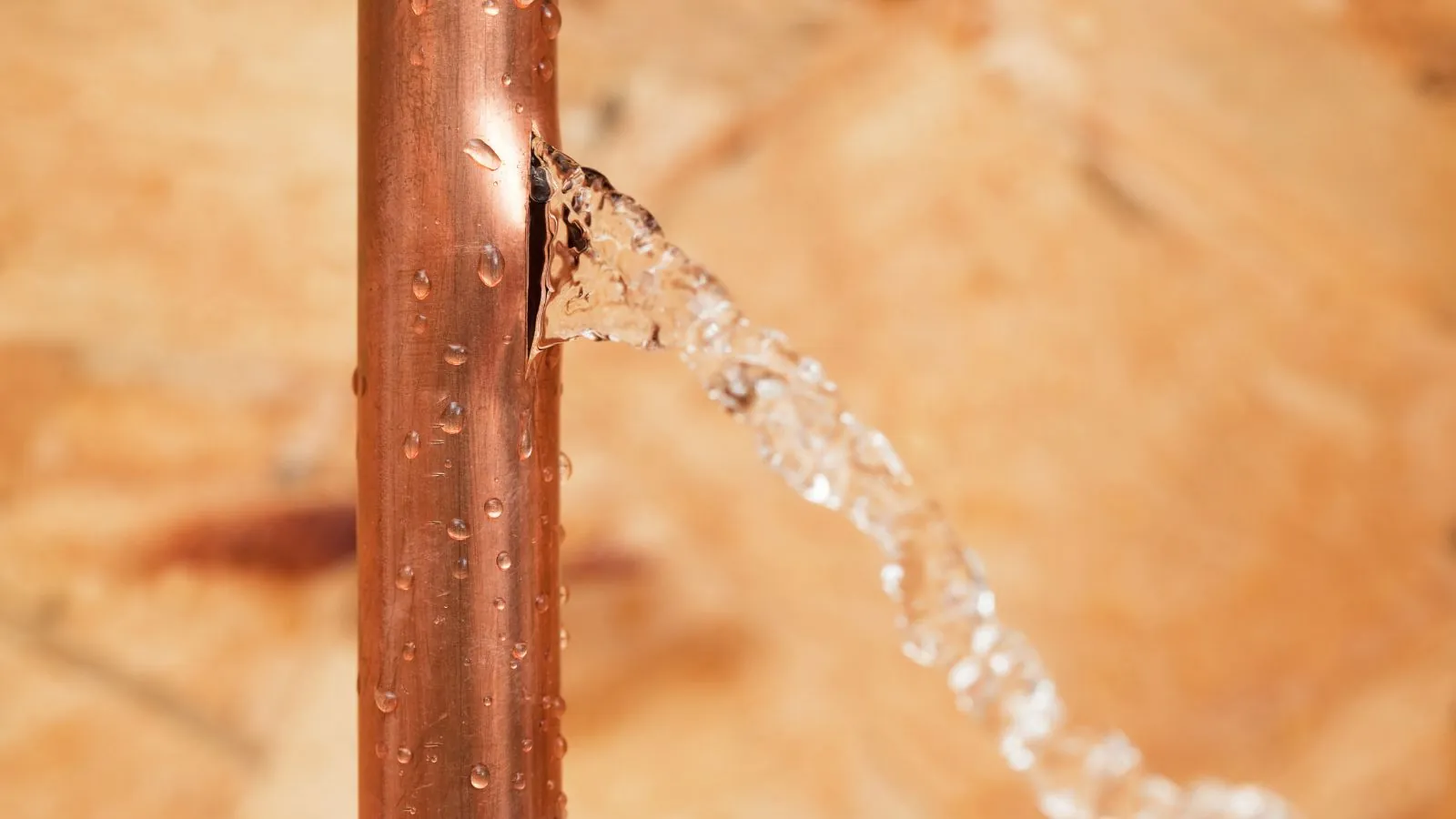
A burst pipe is a pressurized supply line that has split or separated, and the water it releases keeps coming until the valve is closed. If a pipe has burst in your Mitchell, SD home, shut off the main water valve, then call our 24/7 line. Water damage from a pipe break gets worse every minute the supply stays on.
After the valve is closed, turn off power to the wet area only if you can reach the panel on dry ground, lift valuables off the floor, and open a faucet at the lowest point to drain the line. Same-day response is offered when available, including nights and weekends.
Burst pipe emergency: what to do first
- Find and close the main water shutoff. It is usually where the line enters the house, often in a basement, utility room or near the water heater.
- If you cannot find it, call the City of Mitchell Public Works water division at (605) 995-8433 during business hours, or call us and we will help you locate it.
- Turn off power to wet areas only if the panel is dry and reachable, and stay out of water that touches outlets or appliances.
- Photograph the pipe, the water and the damage before cleanup starts.
- Call the 24/7 dispatch line for extraction and drying.
Why burst pipes cause so much damage
Household supply lines run at pressure, so a split in a half-inch line can release a lot of water quickly. The water rarely stays where the pipe broke. It runs down inside the wall cavity, soaks insulation, and drips onto the floor below, which means damage appears in rooms that look nowhere near the break.
Pipes split for different reasons. Freezing is the best known and has its own page, frozen pipe water damage. Corrosion, a failed fitting, a worn flexible hose or a nail through a line cause breaks in any season, and older homes in places like the Mitchell West Central Residential Historic District can have aging metal lines that deserve a plumber's inspection.
How the cleanup works
Once the plumber has stopped the leak, the restoration crew extracts standing water, opens the wall or ceiling where the water traveled, and measures moisture with meters and thermal imaging. Wet insulation and soaked drywall are removed because they hold water and dry slowly.
Air movers and dehumidifiers then dry the framing, subfloor and remaining materials until readings reach the target, a process described on our structural drying page. Once everything is dry, rebuild begins, from new drywall to flooring.
| Where the pipe broke | Where the water goes | Typical first steps |
|---|---|---|
| Inside an exterior wall | Down the cavity to the floor and basement ceiling | Open the wall, remove wet insulation, dry framing |
| Under a kitchen or bath floor | Subfloor, cabinet bases, room below | Extract water, check cabinets, see kitchen water damage |
| In an attic or ceiling space | Insulation, then through the ceiling | Ceiling inspection, see ceiling water damage repair |
| In a basement or utility room | Floor, wall bases, stored items | Pump and extract, move belongings, dry walls |
Insurance and documentation
The South Dakota Division of Insurance advises homeowners to read their policy, file promptly, photograph damage before temporary repairs, keep receipts, and wait for the insurer to inspect before permanent repairs. A sudden pipe break is often a covered event, but check your policy or ask your insurer, because wording and deductibles differ.
What affects the cost of burst pipe cleanup
The pipe repair itself is a plumbing cost. The water damage side depends on these factors.
- How long the pipe ran before the water was shut off
- Which floors and rooms the water reached
- Materials affected, such as drywall, insulation, carpet and cabinets
- Days of drying equipment needed to reach target moisture
- Rebuild scope after the structure is dry
Want your real number?
Every loss is different, so the honest number comes after a look at the damage. Call the 24/7 line and we explain the scope and price before work starts.
We serve Mitchell and nearby towns, including Mount Vernon to the west. If the break is in a business, the process is similar but downtime matters more, as covered on our commercial water damage page.
The professional reference for this work is the ANSI/IICRC S500 standard for water damage restoration, which sorts water by contamination level and sets how materials are dried or removed. For a burst supply line the water is usually clean at first, and the standard is why a crew still watches how long it sits.
Do you handle burst pipe emergencies at night or on weekends in Mitchell?
Yes. Dispatch is open 24 hours a day, every day. Shut off the main valve, call, and we start working out the plan. Same-day response is offered when available.
Do I need a plumber or a restoration company first?
Both, in order. Close the main valve yourself, then have a plumber repair the line while a restoration crew handles extraction and drying. Calling us early lets the water work start without waiting on the repair.
Will my homeowners insurance pay for a burst pipe?
Sudden and accidental pipe breaks are often covered, while gradual leaks and neglect often are not. Read your policy or ask your insurer, and document the damage with photos before cleanup.
Can the walls be saved after a pipe burst?
Sometimes. Clean supply water caught early may allow drywall to dry in place, but soaked insulation and swollen drywall usually come out. Moisture readings decide, not guesswork.
How do I find my main water shutoff?
Look near where the water line enters the house, often in a basement, utility room or next to the water heater. If you cannot find it, tell dispatch and we will talk you through the search.